fbpx

Beyond Transactions: Building Customer Knowledge Value (CKV) for Long-Term Brand Resilience

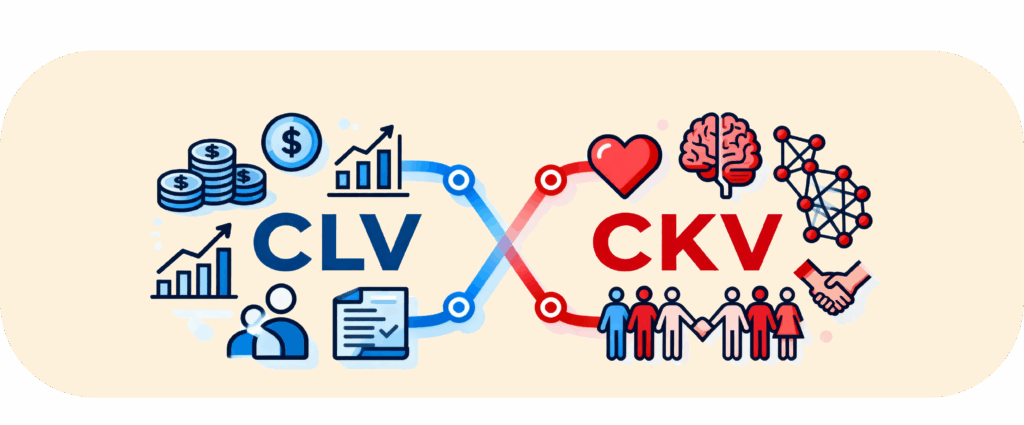
In today’s hypercompetitive market, brands can no longer depend on short-term campaigns or viral moments to stay relevant. Real endurance comes from cultivating deep relationships with customers—relationships that transcend transactions. This is where Customer Knowledge Value (CKV), a vital dimension of Customer Lifetime Value (CLV), makes the difference.

While CLV traditionally measures the revenue a customer generates over time, CKV reflects what customers know, feel, and believe about a brand. It is the memory capital and emotional equity stored in customers’ minds—the stories they remember, the values they associate with the brand, and their willingness to advocate for it. Strong CKV means a brand is not just selling products but creating custodians who safeguard its reputation and drive sustainable growth.

Why CKV Matters

CKV extends beyond satisfaction or repeat purchases:

  • Trust and credibility – Customers who believe in a brand’s mission are more forgiving when mistakes occur.
  • Emotional connection – Shared values strengthen attachment, turning customers into long-term allies.
  • Advocacy – With strong CKV, customers willingly defend and amplify a brand’s message.

This resilience cannot be bought with advertising alone; it is built through consistent storytelling and authentic experiences.

A prime example is LEGO. Through its “LEGO Ideas” platform, fans submit and vote on designs, with top concepts produced as official sets. Customers feel like co-creators, embedding pride and advocacy into their connection with the brand. That is CKV in action: knowledge, trust, and emotional investment transformed into loyalty.

Marketing Automation as a CKV Builder

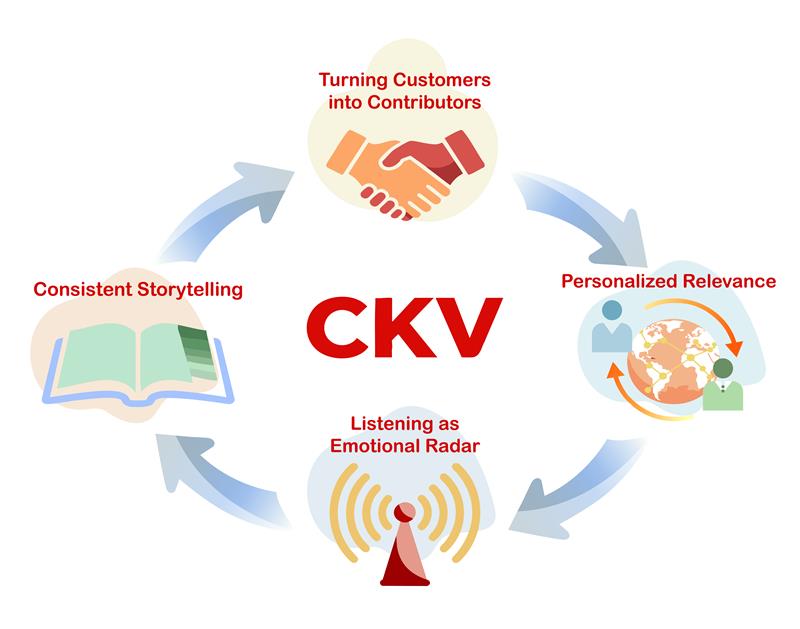
CKV requires authenticity, but technology provides the scaffolding to sustain it. Marketing automation is often seen as a sales efficiency tool, yet its true potential lies in reinforcing CKV at scale.

  1. Consistent Storytelling

Automation ensures that brand DNA is reinforced across touchpoints—welcome flows, loyalty programs, and anniversary campaigns. Over time, repetition of values builds recognition and trust. Patagonia, for example, uses automated communication not just for sales but to share environmental initiatives, embedding responsibility into the brand experience.

  1. Personalized Relevance

Segmentation can go beyond demographics to reflect values and habits. Starbucks Rewards, for instance, delivers personalized offers while reminding customers of ethical sourcing practices. Each interaction ties convenience to conscience, reinforcing shared values.

  1. Listening as Emotional Radar

Automation platforms integrated with social listening provide early warning of sentiment shifts. This “emotional radar” helps brands identify risks or opportunities before they escalate, showing customers their voices are respected.

  1. Turning Customers into Contributors

Workflows can invite customers into two-way dialogue—feedback surveys, beta programs, or co-creation challenges. By recognizing contributions, brands transform consumers into stakeholders. Nike’s running clubs and LEGO’s community challenges demonstrate how structured engagement cultivates CKV.

CKV as Brand Insurance

CKV often remains invisible until it is tested. Brands with strong CKV enjoy:

  • Resilience in crisis – Supportive voices rise organically.
  • Tolerance for mistakes – Long-term equity buys forgiveness.
  • Lower acquisition costs – Advocacy reduces reliance on paid campaigns.
  • Sustained differentiation – Competitors can copy products, but not the emotional capital stored in loyal communities.

In this sense, CKV functions as brand insurance, buffering against market volatility and reputational risks.

A Leadership Agenda for CKV

To make CKV central to brand strategy, leaders should:

  1. Define values clearly and embed them into campaign approvals and partnerships.
  2. Automate value-driven journeys, not just promotions.
  3. Invest in communities that allow co-creation and customer-to-customer interaction.
  4. Measure CKV alongside CLV, tracking advocacy, sentiment, and engagement.

Conclusion: From Customers to Custodians

Brands that chase only transactions risk being forgotten as quickly as they rise. Those that invest in CKV, however, build something far more enduring: a network of custodians who carry their story forward.

Marketing automation is not simply about efficiency. It is a strategic enabler for embedding brand values into daily journeys, amplifying customer voices, and cultivating trust. The true test of a brand lies not in how loudly it can broadcast its message, but in how deeply that message is planted in the minds of its customers.

When CKV is strong, customer relationships become unbreakable—and so does the brand.

FAQ

What is Customer Knowledge Value (CKV)?

Customer Knowledge Value, or CKV, is the value a brand builds from what customers know, feel, remember, and believe about it over time. It goes beyond transactions. A customer may buy once, but that does not mean the brand has earned trust, emotional connection, or long-term relevance. CKV is about whether customers understand the brand, recognize its values, remember its story, and are willing to stay engaged beyond a single promotion or purchase. That makes it especially useful for brands that want to build resilience, advocacy, and stronger retention rather than relying only on short-term conversion campaigns.

How is CKV different from Customer Lifetime Value (CLV)?

CLV and CKV are related, but they answer different questions. CLV tells you how much revenue a customer may generate over time. CKV tells you how deeply that customer understands and values the brand. One is commercial, the other is relational. A customer with high CLV may still be price-sensitive and easy to lose. A customer with strong CKV is more likely to trust the brand, respond positively to its communications, forgive occasional mistakes, and recommend it to others. In other words, CLV helps explain future revenue potential, while CKV helps explain loyalty strength and brand durability.

Why does CKV matter for long-term brand resilience?

CKV matters because brands become vulnerable when their customer relationships are built only on promotions, convenience, or short-term transactions. In crowded markets, that makes them easy to replace. When customers have stronger knowledge of the brand, clearer emotional connection, and more confidence in what it stands for, they are more likely to stay engaged even when competitors offer discounts or when market conditions change. This is where CKV becomes a form of resilience. It helps brands reduce dependence on constant acquisition pressure and build a customer base that is not only buying, but also remembering, trusting, and returning.

How can marketing automation help build Customer Knowledge Value?

Marketing automation helps build CKV by making brand communication more consistent, more personalized, and more meaningful across time. Instead of using automation only to push promotions, brands can use it to reinforce values, deliver content that matches customer interests, and create feedback loops that make customers feel seen. For example, automation can support welcome journeys that explain the brand story, post-purchase journeys that deepen understanding of product value, and follow-up communications that invite feedback or participation. Used this way, automation is not just a conversion engine. It becomes a tool for strengthening memory, trust, and brand connection at scale.

Contact US

Features Articles

Get ready to find a professional email marketing company in Hong kong?

RADICA as #1 All-In-One Email Marketing Automation Platform can ease your concern.

About RADICA

RADICA is a Hong Kong leading email marketing solution provider dedicated to accelerating revenue and maximizing customer connection with customer engagement solution in B2B, B2C and E-commerce industries. With RADICA’s advanced onmichannel marketing automation platform RI+, it is much easier and effective to spread out cross-channel messages with automated and personalised journey, even with high volume within short period of time. Our clients ranging from luxury, banking and insurance to food and beverage like Chanel, BEA, LEVI’s, Chow Sang Sang and Starbucks. Since 2000, RADICA as the leading email marketing and CRM agency in Hong Kong have focused on growing the value of their customer database by making wise use of data analytics in direct marketing. Learn more Radica Systems Limited at www.radicasys.com.

FAQ

How do these marketing automation journeys handle cross-channel frequency in Hong Kong?

Cross-suppression rules automatically pause SMS if a customer opens an App Push or WhatsApp message—preventing overload across millions of users.

What scale can this marketing automation platform handle?

The engine processes millions of loyalty members in real time, with sub-second trigger latency even during peak shopping periods like Double 11 and Lunar New Year.

What are loyalty automation journeys in retail?

Loyalty automation journeys are behavior-based customer flows that trigger the next message automatically based on what a member does, such as reaching VIP status, becoming inactive, unlocking a monthly perk, or showing renewed interest in a product category. Instead of sending the same campaign to everyone, retailers can make loyalty communication more timely and more relevant. This matters because repeat-rate growth usually comes from small, well-timed actions: a reminder before points expire, a reward when a member becomes eligible, or a comeback message before the customer quietly drifts away. In practice, loyalty automation helps retailers improve retention, increase offer redemption, and reduce the manual work involved in segmenting, exporting, and resending lists.

How can retailers make VIP customers feel truly exclusive in a loyalty program?

VIP customers feel exclusive when the communication is selective, timely, and clearly not meant for everyone. That means identifying high-value members by spend, purchase frequency, engagement, or tier movement, then giving them access to something that feels limited: early previews, priority booking, private reward drops, or one-to-one style recommendations. The mistake many brands make is treating VIPs like the broader member base and simply sending bigger discounts. A better approach is to make the experience feel curated. Channels like WhatsApp or WeCom can work well here because they feel more personal than mass email, especially when paired with limited-time offers, single-use redemption links, or in-store collection privileges.

How can retailers re-engage lapsed loyalty members before they churn?

Retailers can re-engage lapsed members by setting clear inactivity windows, such as 90, 120, or 180 days, and then triggering a comeback journey based on what the customer used to buy, browse, or respond to. The key is not just to say “we miss you,” but to give the person a relevant reason to return. That could be new arrivals in a category they previously purchased, a reminder of unused benefits, or a low-friction reward that makes the next visit worthwhile. The value of automation here is speed and consistency: instead of waiting until the customer is fully gone, the brand can respond while there is still some residual familiarity and purchase intent.

Which channels work best for loyalty automation: WhatsApp, SMS, email, or app push?

The best channel depends on the job to be done. Email works well for richer content, member updates, and storytelling. SMS is stronger for urgency, such as expiring rewards or short redemption reminders. WhatsApp or WeCom is often better for more personal, service-like interactions, especially for VIPs or members who need a more guided experience. App push can work for fast reminders, but only when the brand already has strong app usage. The real advantage comes from combining channels intelligently rather than relying on one. A good loyalty strategy uses the right channel for the right moment, while suppressing duplicate messages so customers do not feel chased across platforms.